Why Strength Training Matters as We Age
And how working with a personal trainer helps you stay active, confident, and ready for what’s next
As we get older, many people notice subtle changes in how they move—strength doesn’t come as easily, balance feels less automatic, and recovery takes a little longer. These changes aren’t a personal failure, and they aren’t a reason to stop doing what you love. They’re part of a normal process of aging—and one that responds incredibly well to strength training, especially when it’s done with guidance.
What happens to muscle as we age?
Research shows that muscle mass is relatively stable through early adulthood, then begins to decline gradually with age. On average, adults may lose about 1–2% of muscle mass per year after age 50, with greater losses later in life.¹ ² While this change is slow, it adds up over time—particularly if strength training isn’t part of the picture.
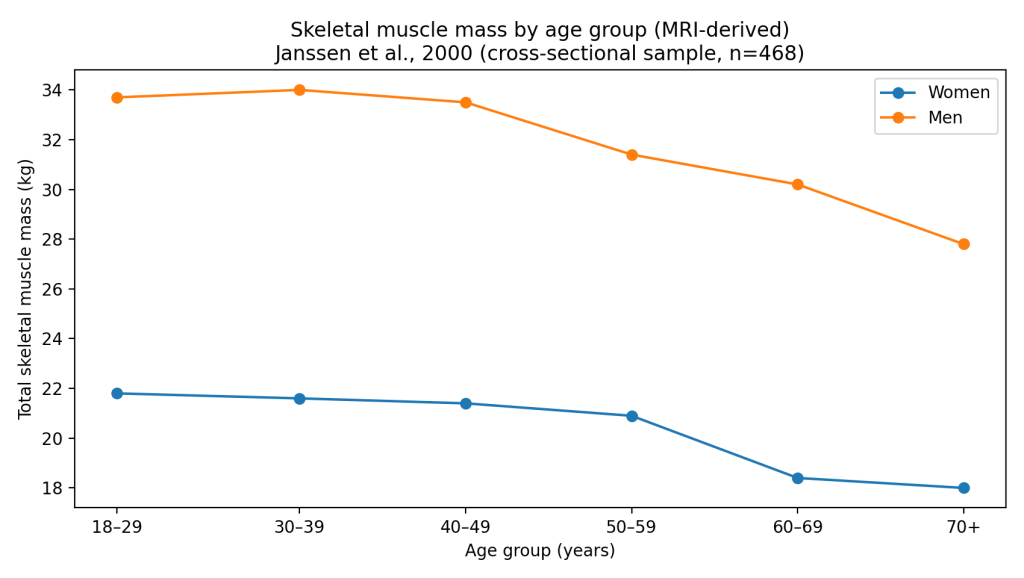
Figure 1. Muscle mass across the lifespan
This graph shows how total muscle mass tends to decline gradually with age in both men and women. While this process is normal, it is not fixed. Strength training—especially when programmed and progressed by a personal trainer—helps slow this decline and preserve the muscle needed for everyday activities and recreation.¹
Strength declines faster than muscle mass—and that’s why it matters
One of the most important findings in modern research is that strength declines faster than muscle size. This helps explain why people often feel weaker, slower, or less steady before they notice visible changes in muscle tone.
This loss of strength isn’t just about muscle—it’s also about how well your nervous system can activate and coordinate those muscles.³ Because of this, strength and power are more closely linked to real-world function than muscle size alone.
Figure 2. Strength vs. muscle mass decline with age
Strength declines earlier and more steeply than muscle mass as we age. This is why structured strength training—focused on proper load, technique, and progression—is so important. Working with a personal trainer helps retrain both muscles and the nervous system, supporting better balance, confidence, and performance over time.³

Why strength training works — at any age
The encouraging news is that aging muscles remain highly trainable. Research consistently shows that adults in their 60s, 70s, 80s, and even 90s can make meaningful gains in strength and function with appropriately designed resistance training.⁵
In a landmark study, frail older adults—including individuals in their 90s—significantly improved strength and muscle size after participating in supervised strength training. These gains translated into better mobility and independence.⁶
This means it’s never “too late” to get stronger—it just means training needs to be intentional.
Why working with a personal trainer makes a difference
Many people know they should strength train, but aren’t sure:
- where to start
- how much weight to use
- how to progress safely
- or how to work around old injuries or joint pain
A personal trainer bridges that gap.
Working with a trainer helps ensure that:
- exercises are chosen for your goals and your body
- form is solid, reducing injury risk
- strength is progressed gradually and safely
- training remains consistent and motivating
Research shows that supervised and well-structured strength programs produce better outcomes than unsupervised exercise, particularly in older adults.⁷
The Takeaway
Aging doesn’t mean giving up strength—it means training for it with purpose. Strength training is one of the most powerful tools we have to support independence, confidence, and quality of life as we age. Working with a personal trainer ensures that training is safe, progressive, and tailored to where you are now—and where you want to go next.
References
- Janssen I, Heymsfield SB, Wang ZM, Ross R. Skeletal muscle mass and distribution in 468 men and women aged 18–88 yr. J Appl Physiol. 2000.
- Lexell J. Human aging, muscle mass, and fiber type composition. J Gerontol A Biol Sci Med Sci. 1995.
- Mitchell WK et al. Sarcopenia, dynapenia, and the impact of advancing age on human skeletal muscle size and strength. Physiol Rev. 2012.
- Frontera WR et al. Aging of skeletal muscle: a 12-yr longitudinal study. J Appl Physiol. 2000.
- Peterson MD et al. Resistance exercise for muscular strength in older adults: a meta-analysis. Aging Res Rev. 2010.
- Fiatarone MA et al. High-intensity strength training in nonagenarians. JAMA. 1990.
- Liu CJ, Latham NK. Progressive resistance strength training for improving physical function in older adults. Cochrane Database Syst Rev. 2009.
- World Health Organization. Guidelines on physical activity and sedentary behaviour. 2020.
- U.S. Department of Health and Human Services. Physical Activity Guidelines for Americans, 2nd ed. 2018.
